Literature and Modern China
Confronting Nature and Identity Crisis: Eco-gender Narrative in Pema Tseden’s Films
https://doi.org/10.54591/SXRM1396
Yijiao Guo
King’s College London
Abstract
By understanding ecofeminism as a theoretical possibility to engage with multi-dimensional interrelations between gender and nature, this paper discusses eco-gender narrative and ethical (self-)representation in Pema Tseden’s The Search (Xunzhao zhimei gengdeng), Tharlo (Taluo), and Balloon (Qiqiu). The parallel between the exploitation of nature and the oppression of women unveils male dominance and its waning influence in Amdo Tibet. Unlike visual ethnography or exoticism-hunting, the natural environment in Pema Tseden’s depiction has been rendered as a secular space imbued with complexity, and it remains tangible while invariably dislocated. In addition to portraying the conflicts arising from modernization and intercultural confrontation, Pema Tseden also metaphorically remodels lingering Tibetan identity, flux of life, and various modernist shocks in three archetypes of female characters: caring mothers (Tara), modern-to-be women (Nora), and femme fatales (Laverna). This refashioning has forged a problematic yet multifaceted representation of identity through correlation and interconnection between gender and nature. Furthermore, these three recurrent archetypes illustrate distinctive reasoning behind sociocultural challenges and shocks Tibetan people experience amidst modernization and socioeconomic development.
Keywords: Pema Tseden, ecofeminism, gender discourse, Tibetan cinema, new materialism
Rethinking Natural Ecology and Gender
Unlike Judith Butler’s emphasis on how gender and its performativity are shaped by discourse (Gender Trouble 37–44; Bodies That Matter 3–9), Jane Bennett states, “humanity and nonhumanity have always performed an intricate dance with each other” (31). By underscoring the “thing-power” of nonhuman actors, Bennett situates humans and nonhumans within interconnected networks, proposing that all entities coexist within interconnected networks, with nonhuman bodies impacting human societies (2–4). Human beings, thus, have always been “in composition with nonhumanity” within these interconnected networks whilst non-human bodies also affect human bodies, shape human society, and transcend boundaries and hierarchical divisions between humans and non-humans (365). In contrast to historical materialism, which defines materiality through human action, Bennett’s perspective posits that all nonhuman matter possesses a form of vitality. This vital agency dynamically interacts with other entities, actively participating in gender performance (14–16). Hence, materializations of gendered bodies have something to do with history, society, tradition, culture, and, most importantly, with bodies themselves.
Critiques have been directed at Jane Bennett’s anthropocentric approach to describing materiality despite a proposal to study vitality in vibrating matter (Sedlmeier 273–74). Particularly, specific historical contexts and socioeconomic constraints seem ambiguous, if somewhat lacking, in theorizations of interactions and entanglements between humans and non-humans (Rekret 240; Schleusener 530–31). Although advancing the debates surrounding performativity is meaningful, it is equally significant to consider how humans perform their gender identities in accordance with non-human beings, such as natural ecology, sociocultural norms, and moving-image artworks. More precisely, what role have non-humans played in socio-gender performativity by humans? How are these performed actions or their processes represented and mediated through film—another non-human entity shaped by and shaping humans?
These inquiries do not necessarily seek to reiterate various agencies, institutions, and disciplinary forces that construct Tibetan social matrices, with women, non-humans, and natural environments being systematically and continuously oppressed. Nor does this paper examine micro-material faculties and properties of those shaping powers, such as the structure of a Tibetan family, the departmentalization of the religious system, or the numerous images of gender biases. Instead, the preliminary objective of this paper is to explicate how natural ecology and Tibetan women confront and interrelate with one another in Pema Tseden’s (Wan ma cai dan, 1969–2023) films, wherein non-human entities shape and are shaped by humans.
The natural ecology of Amdo Tibet (Anduo Zangqu) is actively independent from humankind, while ceaselessly interacting and interrelating with its denizens. The performativity of Tibetan women, in this sense, is not merely a matter of gender but simultaneously a matter of gendered “platformativity” closely related to society and nature through the medium and technology of cinema (Lamarre 287; 301–02). Namely, cinema operates as a platform that actively performs and shapes social gender relations, cultural forms of femininity, and subject positions of Tibetan females. The eco-gender narrative in Pema Tseden’s films showcase nature and gender as mutually constitutive forces in a manner extending current theorization of ecology and ecofeminism. Furthermore, nature captured in these films goes beyond local natural environment to involve the Tibetan people who must earn a living through environmental hardship and hostility. Natural ecology, as filmed, is neither an abstract object with threatening yet exploitable material contents/substances inside, nor a given object externalized and alienated as an unfriendly and troublesome non-human being.
Setting aside potential misunderstandings, the argument that ‘natural ecology is a thing’ does not suggest that nature can be fully known or exhaustively represent perspectives on nature, media, and humanity in cinema (cf. Heidegger 8-10). As Object-Oriented-Ontology theorist Graham Harman holds, things are perpetually withdrawn from human access and cannot be known (37). In a more contextualized sense, this argument does not suggest that those outside Tibet, Han Chinese in particular, may acquire knowledge through films. The conjecture about unified, immobile, and immanent objects or “aggregates of traits” (Appadurai 7) does not exist for Tibetan culture, Tibetan people, and Tibetan ecology (cf. Maitra and Chow 17).
Similarly, this paper refrains from understanding natural ecology in Pema Tseden’s films as “conatus” or “univocity of being,” which stop short in falsely cheering for a single substance encompassing all of nature, humanity, non-humans, gods and divinities, as well as all other beings (Spinoza 283-84; Deleuze 67). It is not a simplistic formula of nature residing within humanity or vice versa. Rather, nature and human beings are independent beings in themselves and should not be conflated. Nature is neither a human-made concept nor a space produced by and through human actions. Nevertheless, it would be equally mistaken to disregard evident connections, interactions, and interrelations between nature and humankind. Human beings inhabit a land beyond human will and control, while nature is neither an other to humans nor are humans an other to nature. Hence, the analytical approach seeks not to separate humans from nature or nature from humans, but rather to explore subtle correlations, interconnections, and interactions between ecology and people inhabiting ecologies. The Search (Xunzhao zhimei gengdeng, 2009) offers a useful case to examine how these correlations, interconnections, and interactions have been represented and reshaped in and through cinema. The state-built asphalt roads overshadow other natural scenery, as seen by four men—the casting crew for the film adaptation of Drime Kunde, a traditional Tibetan opera. The crew travels in a Jeep across desolate mountainous terrain. At one point, the road takes on presence as a token of space that intertwines performance and life. Because contemporary Tibetan men can no longer embody the role of Prince Drime Kunden–an idealized icon of masculinity, the crew is unable to find a suitable actor for the film adaptation, thereby (re-)defining “male identity and masculinity” (cf. Barnet 143-50) even by the end of the film. In other words, contemporary Tibetan men have lost conventional masculinities needed to play a male role in film and reality. The absence of this man-already-lost in the present exerts a desire to anchor something masculine in a past that can no longer become an anchorage. This is thus the search for the “thing” of nothing, a thing lost and therefore nonexistent, an anchorage without anchor. Consequently, Tibetans perform new sets of characters and roles, variants on the historical male figure of a manly persona.
In a less symbolic interpretation, natural ecology is viewed through the male gaze for the crew members to come and take, upon which practical and worldly concerns predominate and predetermine nature as merely an objective view. It is the road constructed in a natural environment, rather than nature itself, that holds greater significance for these men. Their raison d’être is to be on the road into nature, extracting and reclaiming masculinity. As Thomas Lamarre says, nature is reduced to “environments and static contexts that serve as repositories of fixed values” (289). As such, natural ecologies are rendered pragmatic and merely visual tableaux. Moreover, a male-digital gaze is formed after the crew members videotape nature as “the image seen” to constitute egoic fascinations (Mulvey 363–64). Looking through the DV camera lens behind the windshield of a moving car, the four men embark on a quest not only for lost masculinity and Tibetan tradition, but also for a landscape that can be recaptured, remastered, and tamed by means of the automobile and modern technologies in infrastructure (cf. Berry 97–98).
The female character (Lumo Tso, Limao cuo) in the car sees nature differently. She is chosen to play the princess in the film, traveling with the crew in search of her ex-lover. In a medium close-up shot, the girl leans against the rear door, and a lake surrounded by mountains reflected on her veiled face behind the window glass. It is noteworthy that in Tibetan culture and belief, lakes are considered sacred places of purity for divinity to reside in and rest. Lakes also symbolize fertility, life, and growth. This praise for female virtue and femininity dictates what it means to be a woman and prescribes how femininity should be expressed and performed. However, juxtapositions between nature and femininity are subtle, as when the girl suddenly sits up straight and gazes outside. The camera cuts to the girl’s point of view, and the audience sees a large lake in the subsequent shot. This is the only female point-of-view shot, as well as the only shot of the natural environment without driveways and villages. In this extremely long shot, a wide sapphire-like lake appears as if fallen from heaven onto this arid land. Blue water and dazzling sunlight truly emblazon thinness in the heady plateau air of Amdo.
As the car moves forward, the camera cuts back to the girl’s veiled face; the girl and the lake merge into one image (Fig. 1).
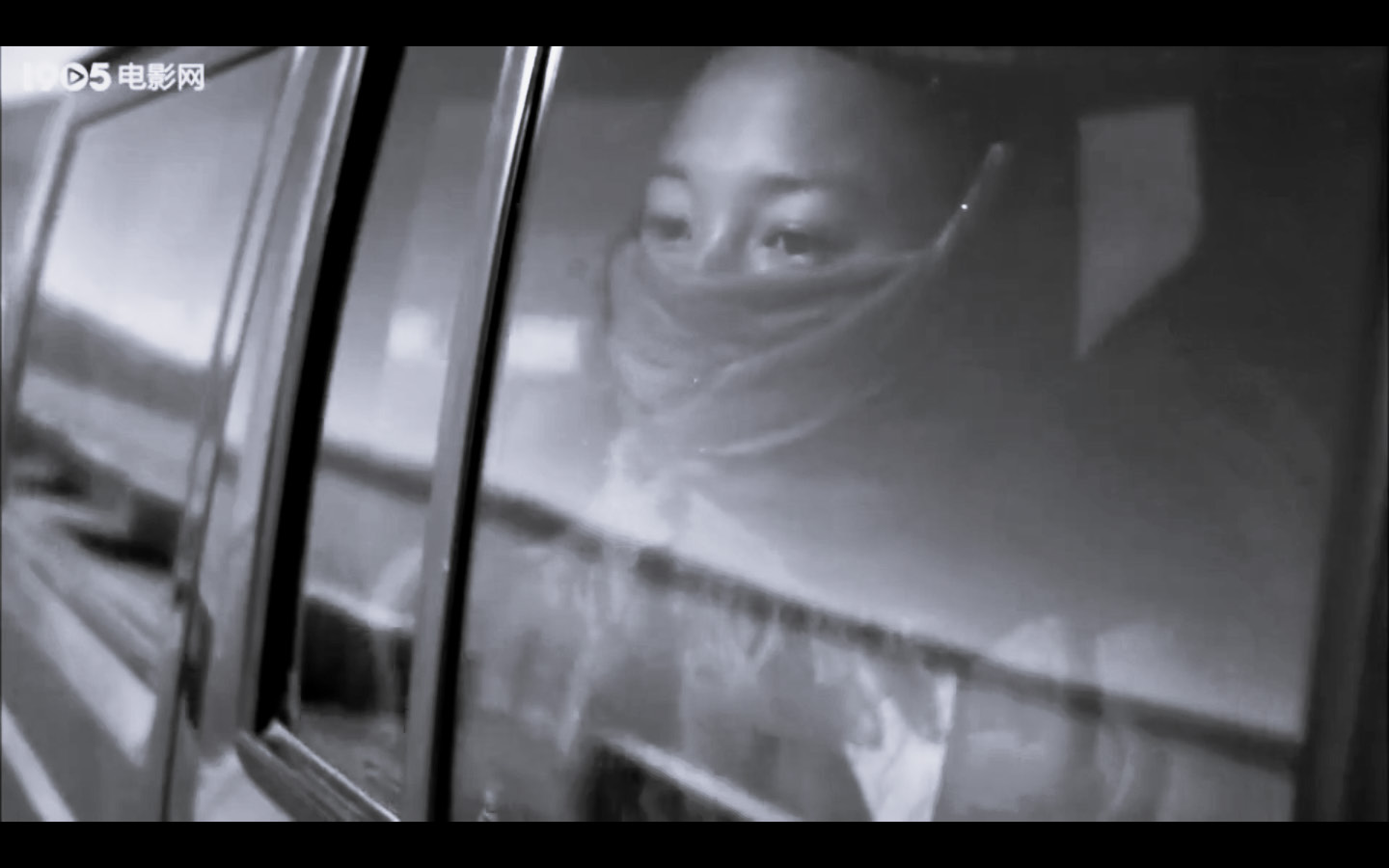
Figure 1 The girl and the reflection of the natural environment merge into one in a medium close-up.
This overlapping image becomes an eco-feminist image, where nature and femininity transcend the metonymic relationships between fertility and birth-giving in traditional Tibetan mythology. The lake and girl retain their nature, while mutually interconnecting and interacting with one another. The girl does not act upon the water and distant mountains outside. Rather, she cocreates an image of nature reflecting upon her face and body. The lake remains a part of nature, captured by and through the purely optical situation the girl finds herself in. In return, the lake/nature engages with the girl’s memories of bygone love—a recollection provoked by the eco-feminist image. Interestingly, the casting crew ignores the lake and drives quickly away from it, leaving nature to continue as nature.
It is easy to conclude that men and women see and understand nature differently. Nonetheless, I am more interested in how cinematically-mediated connections, interrelations, and interactions between nature and gender, femininity in particular, have forged a distinctive eco-gender narrative. Therefore, in line with the paradigm of eco-feminism (Vakoch 3–12; Carr ix–x; Yang 3–5), I will continue to outline the dual exploitations of nature and women in Pema Tseden’s films. Analyses will be given on the connection between women and the natural environment amid the sociocultural crises accompanying the ecological transformation of Amdo Tibet from a nomadic land into an economic market.
What follows will first illustrate the stylistic pattern of female characterization in Tharlo (Taluo, 2016) and Balloon (Qiqiu, 2019). Then, I will discuss how ecology and femininity have reshaped but never confirmed the identities of both Tibetan women and men today. Finally, I will address how struggles to reconceptualize gender and nature correlate with ongoing sociocultural predicaments, especially impeded re-identification as Tibetan.
It is problematic to categorize Pema Tseden as formalist. Nonetheless, there is a recurring formal style in which women are commonly characterized into three female archetypes and/or three imagined femininities: Tara, Laverna, and Nora. Tibetan women in Pema Tseden’s films are represented as either bodhisattva-like savior, threatening and dangerous femme fatale, or modern woman who chooses to leave their family with no clear idea of their future. In so saying, I do not mean that the analysis of his characterisation is enough. In actual fact, Pema Tseden became increasingly subtle and complex in addressing gender issues, requiring various analytical methods and theoretical frameworks for interpretation. These three archetypes provide a cogent approach to describing and elucidating the director’s stylistic pattern of female characterization. Nor do I mean that his films only feature three types of female roles. Scholars Zhao Min and Yuan Zhizhong identify four types of female characters in these films: the working woman, rakshasi (a human-devouring demon or luocha nü), new woman, or empty symbol (41-43).
Although close affinities may be found between Hinduist/Buddhist mythology and the religion and culture of Amdo, the collocations of fierceness and death differentiate the archetype of rakshasi from femme fatale in both symbolic meaning and narrative function. Furthermore, it is problematic to consider the female character in The Search as a signifier of “emptiness” (43), especially when she and nature are interrelated and interconnected.
Tara, Laverna, and Nora
In specific terms, Tara, also known as Dolma (literally meaning “she who saves”) and Sgrol-ma (literally meaning the mother/goddess of liberation), is a female bodhisattva (meaning Buddha-to-be) of liberation and compassion in Tibetan Buddhism (Purna; Beyer vii; Kaur 213). This ever-caring female divinity blesses success in one’s work and protects people in the world. Tara has twenty-one emanational forms, amongst which the most famous two are Green Tara (Sgrol-ljang or Lü dumu), who will protect one from fears and obstructions, and White Tara (Dolma Karpo or Bai dumu), who personifies long life, compassion, healing, and serenity (Kaur 214).
The Tara-like female characters point to a reflection of Mother Nature, who endures all difficulties with infinite energy. Many female depictions develop from this archetype, especially housewives, mothers, and nuns. The wife and mother Drolkar (this name is the short form of Dolma Karpo/White Tara) in Balloon, the male protagonist’s lover in Jinpa (Zhuangsi le yizhi yang, 2018), and the relatively insignificant role of the housewife in Snow Leopard (Xue bao, 2023), to name a few, shoulder all household chores to help their spouses through daily hardship. All these female characters have weathered difficulties of their own, alongside those of families and male spouses/partners. They are also expected to be compassionate, goddess-like, such as the nun Drolma (Yangchuk Tso, Yangxiu cuo), whose name means Tara, in Balloon. Drolma devotes herself fully to Tibetan Buddhism and chooses not to pursue revenge after her boyfriend betrays and abandons her. Male characters, in contrast, bear the financial responsibility, and in this role the man is oppressor. Coincidentally, actor Jinpa (Jin ba) plays the male lead in all three films.
Laverna is a goddess of thieves, cheats, and the underworld (Chisholm 293), encompassing femme fatale characters who are usually portrayed as threatening and dangerous to male characters. As arguably the most representative figure, Yangtso (also Yangchuk Tso) in Tharlo represents this sensuous hazard that will jeopardize a Tibetan man’s socioeconomic power and male privilege. The protagonist Tharlo (Shide Nyima, Xide nima) in this film encounters an existential crisis after losing a fortune of 160,000 yuan (roughly USD $25,000 in 2015) along with his ponytail. These huge losses jolt him out of his once stable and coherent Tibetan manhood. Facing a crisis of self-identity and the symbolic castration of cutting off the ponytail, Tharlo finds his only solution is to self-harm or even commit suicide, prostrate before physical and spiritual mountains.
Nora is the female protagonist in Henrik Ibsen’s (1828–1906) 1879 play A Doll’s House, and comes to function in China as a symbol of modern women who depart from patriarchal kinship structures and articulate new forms of female independence and subjectivity. Drolkar’s situation and action in the final scene of Balloon exemplify this. After she struggles to have an abortion (the result of which is left open-ended), she finally decides to leave her husband and two sons, not necessarily for good, but for the moment, to recover from both physical and psychological traumas in the monastery where her younger sister Drolma practices. The future of Drolkar, akin to Nora’s fate in the play, remains opaque. Nevertheless, both protagonists initiate their autonomy in a practice of (re-)becoming a woman (de Beauvoir xiii-iv). More detailed discussions on each archetype will be given in the following section.
Rethinking Gender and Ecology in Tibet and Tibetan Cinema
Before moving further, it should be noted that Pema Tseden’s eco-gender narrative does not achieve or epitomize something ideal. On the contrary, many gender and environmental issues in his films must be problematized and critically reviewed. Case in point, the adoption of certain female archetypes per se stems from a rather delimited scope. Nonetheless, instead of giving unequivocal conclusions and answers, the necessity at this point is to contextualize these problems first before questioning how one can understand the shared attention on, if not anxiety over, the ethical-gender identities and the deteriorating natural-social ecologies in Tibetan cinema, or the Tibetan New Wave (Zangdi dianying xin langchao) over the past two decades.
In this regard, scholars (M. Li 117; Berry 91–93; Frangville 108–09; Xiang 84–88; Yau 121–22; Shen 32) have thrown light on the differentiation and correlation between Pema Tseden’s visual representation and ethnographical depictions of exotic adventure in the wilderness commonly found in categories of ethnic minority films (shaoshu minzu dianying). Depicting Tibet and Tibetan people atypically, Pema Tseden disenchants his homeland and makes it clear that the self-identity of Tibetans must be continuously contested and redefined. In addition to ongoing struggles over ethnicity, religion, and culture, the space of Amdo Tibet also exerts contestations between tradition and modernity, as well as center and periphery, putting the notions of homeland and nature-human relations in need of questioning (Lo 162–63; Gong 9; Huang 112; Xu 151–53). Anup Grewal’s article elaborates on how the filmmaker has contested the landscape of Tibet as a heterogeneous realm through cinematic aesthetics and techniques (138–40). Myriad studies have also investigated problematic gender narratives and androcentric views about femininity and women’s social roles (Robin; Han 162; Y. Li 480). In short, the gender hierarchy is based on economic inequality in one’s family as well as in Tibet, where men have access to economic and social capital, thereby exclusively able to participate in production.
Previous scholarship, though much needed, has paid insufficient attention to intersections between cultural-ethnic identity, gender, and nature. Even so, depictions of women on screen have been inextricably intertwined with depictions of natural Tibetan ecology, serving as a reflection on identity crises amid the unavoidable confrontation with modernity and modernization in Tibet (particularly from the 1980s onward). Male oppression extends from the domestic to the natural sphere, with both women and nature seized as hostages to be exploited and degraded (Mellor 1). As Donna Haraway has it, women are made spectacles of exploitation in a nature that can only be endured when it becomes lucrative (265). Put another way, by integrating Tara, Laverna, and Nora into nature, Pema Tseden also initiates a cinematic strategy to rerepresent Tibet, Tibetan people, and their day-to-day lived experiences. Such re-representation negates homogenizing and foreignizing gazes upon Tibet and Tibetan identity, underlining vernacular life and complex individual psyches amidst rapid sociocultural and socioeconomic changes. This highlights the subtle, and sometimes awkward, transformations of femininity in Amdo Tibet.
The awkwardness and imperfection in these re-representations manifest a distinctive situation within Pema Tseden’s cinematic world, challenging Eurocentric theoretical frameworks of ecofeminism and ecology that view nature as significantly impacted and altered by humankind (Crutzen and Stoermer 17– 18). In Pema’s films, nature cannot be entirely reshaped or inhabited. The failed quest within nature frustrates males engaged in seeking lost masculine identity. At the same time, femininity can frustrate and threaten Tibetan men even more. This typically occurs when female characters voluntarily or involuntarily destabilize the patriarchal matrix, symbolically or physically returning to nature. Tharlo demonstrates how a woman impairs a Tibetan man’s masculinity and identity, wherein suspension of Tibetan masculinity and identity is attributed to a female thief. The protagonist, Tharlo, falls in love with the hairdresser Yangtso at first sight. However, Tharlo’s life is desperately hampered after Yangtso steals Tharlo’s money and runs away. In the end, Tharlo mutilates himself by exploding a firecracker in his left hand. The shock of transitioning between conventional and newly-imported life ethics thrust Tharlo into mirroring hazardous and traumatizing representations of the ongoing socioeconomic changes in Amdo Tibet.
Interestingly, Pema Tseden captures Tharlo and Yangtso’s courtship inside a karaoke bar in a static medium long shot. Positioned on the left of the frame, Tharlo is singing a laye (layi),[1] the traditional Amdo Tibetan love song, in front of Yangtso to show his affection. This laye portrays the beautiful scenes of two loving larks in the forest and how strangers in a village come to know each other. While Tharlo wants to use this love song to bring Yangtso closer, the strikingly contrasting context of the laye lyrics and the noisy, dim, neon-flashing room suggests no possibility of reconciliation between traditional and modern life. The dream of love in an idyllic environment conflicts with utilitarian objectives in contemporary society, with unspoken conflicts over mismatched intentions. Tharlo’s desire for Yangtso has nothing to do with Yangtso’s eagerness to find a better life in a big city like Beijing, Shanghai, or Hong Kong. Yangtso’s final decision to steal the money and leave Tharlo puts this man’s expectations and desires out of joint. In other words, Tharlo wants Yangtso to become his imagined traditional Tibetan wife—a Tara, in his dull, monotonous life. However, Yangtso plans to escape from this small town, thus transforming into Laverna.
The disjointed and unmatched soundtracks between Tharlo’s singing and the background music create another stark contrast in the room. While Tharlo sings, the monitor screen to the right of the frame plays a music video of pop song “Beauty in the Past (Cengjing de meili).” This song was written in 2009 and performed by Tibetan singer Chongshol Dolma (Qiongxue zhuoma) in Mandarin Chinese. The lyric reads:
That sweet happiness,
like a girl herding her sheep. She is chasing the time in the morning glow,
You said love is the heart’s destination,
but I put on a scarlet kasaya for my love (Chongshol Dolma).[2]
This video fabricates a mise en abyme in which contestation of affection and caution in the melodramatic, hyper-sentimental lyrics parallels Tharlo’s ballad. Meanwhile, the audience may find another parallel in Tharlo’s elusive projection of affection on the mispositioned desire object of Yangtso and sentiment in the song lyrics on the monitor. In addition to lamenting over time and youth, what the herding girl chases in “Beauty in the Past” is a lack that can never be fulfilled. Her desire to keep peace with the passage of time and her bygone love, like Tharlo’s craving for Yangtso, cannot be satisfied. Since Laverna is not Tara, Tharlo’s desire is an illusion concerning an imagined female figure—one that does not exist. Therefore, Tharlo can never actualize a desire that is already not real, already in a state of deficiency. Covering the heart with a scarlet kasaya symbolizes caution in Buddhist teachings, a trick that camouflages this Laverna-like woman’s true intentions. The refashioning of a religious symbol in a commercial space also makes a prophecy of Tharlo’s inevitable frustrations tied to unfulfillable desires. The rest of the film is more about unravelling such a foretold message.
Noticeably, Yangtso is never found in a natural environment, but in commercial spaces of the country’s central district, like a barber shop, karaoke bar, or concert venue. In contrast, Tharlo travels from the county to grazing lands and rolling hills. He creates more notable and direct interactions with natural ecology. One exception, if not a peculiarity, arises after Tharlo shaves his ponytail. He then attends a concert with Yangtso at a venue called the Great Norbulingka World of Singing and Dancing (Luobulinka gewu da shijie), where the realms of the worldly sphere, religion, and nature intermingle.
Situated in Lhasa, Norbulingka served as the summer residence of successive Dalai Lamas until 1959, after which it was transformed into a public park and tourist attraction. The once-sacred palace is now repurposed for entertainment, demonstrated as the camera captures the lively, hand-clapping vibe of singer Dekyi Tsering’s (Deji cairang) rap performance in a static wide shot. The long-focus lens blurs the foreground, directing the audience’s gaze solely towards the singer in the background. Then, the focus is pulled from the background to Tharlo and Yangtso seated in the front right. Tharlo shows no interest in either the performance or the venue, as he only cares to return to the karaoke bar and sing three new laye to Yangtso. Nevertheless, they remain to watch the show at Yangtso’s insistence. The Potala Palace (Budala gong) is depicted as background for the stage set, silently awaiting Tharlo’s imminent confrontation with another man. Two life-size posters of the singer, positioned on either side of the stage, compete with a painting of the Potala Palace, the former winter palace of the Dalai Lamas, to claim as much space and visual attention as possible within the shallow depth of field.
Residences of religious leaders bespeak historical rendering of nature through architecture. These two palaces were, nonetheless, transformed from sacred to decorative spaces in this sequence. These spaces then serve as the backdrop to a popular music concert, informing us as to how the films capture the profound changes and struggles of contemporary life. Pema Tseden brings the cinema to a process of “worlding” and creates “an ongoing source of the meaning and content of entities” (Heidegger 43–61; Wrathall 822; cf. Spivak 252–54), regenerating our understanding of nature, lived experiences, and social gender roles in a place known as Amdo. As a result, nature becomes familiar and palpable through filmic self-representations and the very re-representing medium of Tibetan cinema. Since the pastoral ecology is subject to capitalism and marketization, previous heteronormative structures and the male-dominated economic order face destabilization. They are being compelled to change or, in some views, undergo modernization. Nothing in Tibet today—neither tradition, religion, nor fundamental emotions of human love—escape constant fluctuations that frustrate Tibetan women and men. In Balloon, the correlation between gender, religion, and traditional Tibetan culture strengthen. In a static medium long shot, Dargye and Drolkar sit on a bed and become involved in a fierce quarrel about whether Drolkar should have an abortion. Drolkar feels it is financially impossible to have a fourth child in this family, whereas Dargye insists on keeping the baby, because the lama says this child is the reincarnation of his recently deceased father. After hearing his wife’s unwillingness to keep the baby, Dargye bursts into fury and scolds Drolkar for having no conscience, acting like a demon, being ungrateful, and showing disrespect for the lama by doubting him and the reincarnation belief. Dargye soon loses his temper and slaps Drolkar while Drolkar is trying to explain that her decision is for the family, which can barely support their eldest son to go through middle school. One of the multiple underlying rationales behind Dargye’s violent termination of this conversation is that, in Dargye’s eyes, Drolkar’s doubts over his ability to support the family and her disregard of the lama’s prediction unleash a de facto blasphemous attack upon the authority of religion and the esteem of the patriarchy as a religious authority. It is not only the lama whom Drolkar disrespects, but also her husband, late father-in-law, unborn son, and the reincarnation belief institutionalized and dominated by Tibetan males.
Stylistically, the height and the position of the camera in this low-angle wide long take accentuate tension between Drolkar and patriarchal religion. The camera is positioned in the distance, slightly tilted above the edge of the bed, which roughly equals the height of a child. This spectating viewpoint, therefore, is also the subjective point of view of an infant, looking at the ongoing fight between Dargye and Drolkar, as if the unborn fetus’s or dead grandpa’s soul is crouching at the bedside, watching the couple quarrel over their fates. This ghostly perspective simultaneously accommodates a third perspective of divine or supreme power, as if a transcendental being is also watching this contestation over the fate of Buddhist belief in a world that no longer devoutly believes in religious values.
Pema Tseden repeatedly uses a static medium-wide long shot to film conversations and interactions, either face-to-face or spatially separated by a frame, between the couples in Tharlo and Balloon. His choice of shot size and camera (un-)movement have instantiated the director’s cinematographic style, which nods to Abbas Kiarostami’s (1940–2016) and Hou Hsiao-Hsien’s (1947–) cinematic aesthetics (Rayns). In my opinion, the fixed camera forges an observatory perspective of seeing all ongoing gender disputes. The process of (re-)identifying gendered contestation with an immobile camera invites the spectator to participate with and into the storytelling through the unmoving movement of stillness that is conceivable in cinema. In other words, the stationary camera in each of the two scenes allows the full presence and functioning of a duration of time, durée for Deleuze (2). The full presence and duration of these two films crystallize, materialize, and substantiate ongoing contestations between men and women over their irreconcilable subjectivities and contentious definitions of socio-gender roles in contemporary Amdo Tibet.
Considering that the national policy of birth control has done good for Tibetan women and female subjectivity, the newly-introduced freedoms for Tibetan women, a kind of cloning of female subjectivity, appear eerie and sinful to the grandpa figure, who was the most conservative and traditional patriarch in the film. Tharlo’s comment about Yangtso when she smokes is that a modernized Tibetan woman does not look Tibetan or feminine, as if such a role or type of “Tibetan femininity” truly existed. Despite whatever archetype she becomes, a so-called “modern woman” disallows male protagonist/ subjects’ complete enjoyment of their fulfilled desires and endeavors, causing an avalanche of unsustainable change.
This leads the male protagonist/subjects to fantasizing pleasure and fulfillment. Yangtso, Drolkar, and Drolma, along with other females with or without names in Pema Tseden’s films, are not so much characters as symptoms continuously repressed and fantasized (Breuer and Freud 71; Lacan 243–87; Žižek 155–56). To illustrate this, we recall the traumatic losses of Tharlo and Dargye when the two films end (another coincidence in the storytelling.) Hurt psychologically or physically—or both—by their female counterparts, Tharlo and Dargye both fail to (re-)anchor their male identities (to become a husband for Tharlo and to become a father for Dargye) and fulfill their desires to (re-)master not only their female spouses but also the dominating power of patriarchy. Encounter and interaction with Tibetan women causes nothing but new trauma for these two male protagonists who are trying in vain to hold onto control. By implication, contemporary femininity has brought about great changes in socio-cultural milieu, leading to masculine identity crises.
Later in Balloon, Drolkar decides to recover her health in a monastery. In a hand-held long take, Drolkar gets on a tractor with her sister Drolma and figuratively moves into nature, leaving her sons and husband staring blankly into the distance. After the dawning light gently embraces the two sisters in the open air of grassland and mountains afar, this extreme long shot then zooms in to a close-up shot while panning right to Dargye’s agonized, perplexed, and frustrated face. Drolkar’s decision to leave transforms her from a Tara to a Nora who leaves the domestic sphere with the hope of finding as well as redefining who she truly wants to be, even what it means to be a woman, mother, and wife in and through nature. It is at this point that Drolkar’s leaving differs from her sister Drolma’s detachment from the worldly life and Yangtso’s absconding, for Drolkar does not choose capital or religion, but returns to nature and femininity. Drolkar may not be fully conscious about her decision or her future. After all, she never answers her son’s question about whether she will become a nun. Nevertheless, she who leaves home and returns to the vast earth is also on the way (back) to her independent and autonomous self.
Conclusion
Pema Tseden seems to show little interest in drawing a clear conclusion. He invariably employs ambiguous open endings, never answering the question once posed by Lu Xun (1881–1936): What will happen after Nora leaves? Nor does he indicate what will happen to Nora’s husband, children, and boyfriend once she embarks on a new journey in life. Instead, Pema Tseden introspects tradition, culture, religion, self-identity, ethnicity, gender, and nature by visualizing subtle complexities in today’s Amdo Tibet. The ambivalent psyche of Tibetan people is in a continuing process of sociocultural confrontation. The lives of men and women in his films, as in reality, go we know not where and toward we know not what. Although these things remain unresolved and undetermined, this state of unresolvedness and impossibility of determination represents a pervasive quotidian situation people live through today, in a land full of ambiguity but also hope, the name of which is Tibet.
Endnotes
[1] In oral Amdo Tibetan, “laye” is the homophone of the literary term “la gzhas.” The latter is the commonly used term in written Tibetan, which literally means mountain pass songs (Skal bzang nor bu 1).
[2] All English translations are mine unless otherwise noted.
Works Cited
Appadurai, Arjun. “Grassroots Globalization and the Research Imagination.” Public Culture, vol. 12, no. 1, 2000, pp. 1–19.
Barnet, Robert. “DV-Made Tibet: Domestic Videos, Elite Films, and the Work of Pema Tseden.” DV-Made China: Digital Subjects and Social Transformations After Independent Film, edited by Zhang Zhen and Angela Zito, U of Hawai’i P, 2015, pp. 119–162.
Bennett, Jane. “The Force of Things: Steps toward an Ecology of Matter.” Political Theory, vol. 32, no. 3, 2004, pp. 347–372.
———. Vibrant Matter: A Political Ecology of Things. Duke UP, 2010.
Berry, Chris. “Pema Tseden and the Tibetan Road Movie: Space and Identity Beyond the ‘Minority Nationality Film.’” Journal of Chinese Cinemas, vol. 10, no. 2, 2016, pp. 89–105.
Beyer, Stephen. The Cult of Tārā: Magic and Ritual in Tibet. U of California P, 2020.
Breuer, Josef, and Sigmund Freud. Studies on Hysteria. The Hogarth Press and the Institute of Psychoanalysis, 1956.
Butler, Judith. Bodies That Matter: On the Discursive Limits of “Sex.” Routledge, 1993.
———. Gender Trouble: Feminism and the Subversion of Identity. Routledge, 1990.
Carr, Glynis. “Foreword.” Ecofeminism and Rhetoric: Critical Perspectives on Sex, Technology, and Discourse, edited by Douglas A. Vakoch, Berghahn Books, 2011, pp. ix–xxi.
Chisholm, Hugh. “Laverna.” Encyclopædia Britannica, vol. 16, Cambridge UP, 1911, Wikisource, en.wikisource.org/wiki/1911_ Encyclop%C3%A6dia_Britannica/Laverna.
Chongshol, Dolma. Tianbian de Xizang [Tibet Faraway]. Chengdu aiqinhai wenhua yishu youxian gongsi, 2009.
Crutzen, Paul J., and Eugene F. Stoermer. “The ‘Anthropocene.’” Global Change Newsletter, no. 41, 2000, pp. 17–18.
De Beauvoir, Simone. The Second Sex. The Modern Library, 1968.
Deleuze, Gilles. Cinema 1: The Movement-Image. Bloomsbury Publishing, 2013.
———. Expressionism in Philosophy: Spinoza. Zone Books, 1992.
Frangville, Vanessa. “Pema Tseden’s The Search: The Making of a Minor Cinema.” Journal of Chinese Cinemas, vol. 10, no. 2, 2016, pp. 106–119.
Gong, Jie. “Jiedu ‘Zangdi mima’: Dangxia Zangdi dianying kongjian wenhua shengmei gongtongti jiangou chanshi [Reading The Tibet Code: To Elucidate the Construction of Spatial Cultural Aesthetics Community in Contemporary Tibetan Films].” Dangdai dianying [Contemporary Cinema], no. 11, 2019, pp. 4–10.
Grewal, Anup. “Contested Tibetan Landscapes in the Films of Pema Tseden.” Journal of Chinese Cinemas, vol. 10, no. 2, 2016, pp. 135– 149.
Han, Qiuting. “Nüxing shiyu xia dianying wenben fenxi ji fuhao jiema–– yi dianying Qiqiu weili [Textual Analysis and Symbolic Decoding of Films in a Female Perspective–Using Balloon as an Example].” Xiju zhijia [Home Drama], no. 16, 2021, pp. 162–163.
Haraway, Donna J. Primate Visions: Gender, Race, and Nature in the World of Modern Science. Taylor and Francis, 2013.
Harman, Graham. Object-Oriented Ontology: A New Theory of Everything. Penguin Random House, 2017.
Heidegger, Martin. Poetry, Language, Thought. Harper and Row, 1975.
———. What is a Thing. Henry Regnery Company, 1967.
Huang, Lu. “Diyu wenhua shiyu xia jinnian lai Zangdi dianying de kongjian chengxian [The Spatial Presentation of Tibetan Cinema in Recent Years in the Perspective of Geo-culture].” Sichuan xiju [Sichuan Drama], no. 5, 2021, pp. 110–114.
Kaur, Gurmeet. “Tara in Vajrayana Buddhism: A Critical Content Analysis.” Feminist Theology, vol. 30, no. 2, 2022, pp. 210–221.
Lacan, Jacques. The Seminar of Jacques Lacan Book VII: The Ethics of Psychoanalysis 1959–1960. W.W. Norton, 1992.
Lamarre, Thomas. “Platformativity: Media Studies, Area Studies.” Asiascape: Digital Asia, vol. 4, no. 3, 2017, pp. 285–305.
Li, Meiping. “Dangdai xizang dianying fenlei ji lilun yanjiu [Classification and Theoretical Study of Contemporary Tibetan Cinema].” Xinan Minzu Daxue xuebao: Renwen sheke ban [Journal of Southwest University for Nationalities: Humanities and Social Science Edition], no. 6, 2010, pp. 116– 119.
Li, Yang. “The Silent Tibetan Women and Their Visual Exclusions in Pema Tseden’s ‘Tibetan Trilogy.’” Visual Studies, vol. 38, no. 3–4, 2023, pp. 473–486.
Lo, Kwai-Cheung. “Buddha Found and Lost in the Chinese Nation of ‘Diversity in Unity’: Pema Tseden’s Films as a Buddhist Mode of Reflexivity.” Journal of Chinese Cinemas, vol. 10, no. 2, 2016, pp. 150– 165.
Maitra, Ani, and Rey Chow. “What’s ‘in’? Disaggregating Asia Through New Media Actants.” Routledge Handbook of New Media in Asia, edited by Larissa Hjorth and Olivia Khoo, Routledge, 2015, pp. 17–27.
Mellor, Mary. Feminism & Ecology. New York UP, 1997.
Mulvey, Laura. “Visual Pleasure and Narrative Cinema.” Film Manifestos and Global Cinema Cultures: A Critical Anthology, edited by Scott MacKenzie, U of California P, 2014, pp. 359–370.
Purna, Dharmachari. “Tara: Her Origins and Development.” Western Buddhist Review, vol. 2, 1997, web.archive.org/web/20160303040637/ www.westernbuddhistreview.com/vol2/tara_origins_a_development. html.
Rayns, Tony. “Pema Tseden Obituary: Filmmaker Who Defined Tibetan Cinema.” BFI News, May 12, 2023, www.bfi.org.uk/news/pema-tseden-obituary-tibetan-cinema.
Rekret, Paul. “A Critique of New Materialism: Ethics and Ontology.” Subjectivity, vol. 9, no. 3, 2016, pp. 225–245.
Robin, Françoise. “Women in Pema Tseden’s Films: A So Far Uneasy Relationship a Brief Overview.” Asianart, 2020, asianart.com/articles/ robin/index.html.
Schleusener, Simon. “A Politics of Things? Deleuze and the New Materialism.” Deleuze and Guattari Studies, vol. 15, no. 4, 2021, pp. 523– 542.
Sedlmeier, Florian. “The Cool Touch of Things: Libertarian Economics, Complex Simplicity, and the Emergence of the Tactile Erotic.” Is It ‘Cause It’s Cool’? Affective Encounters with American Culture, edited by Astrid M. Fellner, et al. LIT Verlag, 2014, pp. 273–293.
Shen, Lei. “Xin shiji Zangyu dianying de ‘tuxiang zhuanxing’ [The ‘Image Turn’ of Tibetan Cinema in the New Century].” Dianying wenxue [Movie Literature], no. 18, 2020, pp. 31–33.
Skal bzang nor bu. “An Introduction to Amdo Tibetan Love Songs or La Gzhas.” Asian Highlands Perspectives, no. 37, 2015, pp. 1–36, archive.org/ details/ahp37anintroductiontoamdotibetanl/mode/2up.
Spinoza, Benedictus de. Complete Works, edited by Michael L. Morgan, translated by Samuel Shirley. Hackett Publishing, 2002.
Spivak, Gayatri Chakravorty. “The Rani of Sirmur: An Essay in Reading the Archives.” History and Theory: Studies in the Philosophy of History, vol. 24, no. 3, 1985, pp. 247–72.
Tseden, Pema, director. Balloon (Qiqiu). Beijing Jiu Zhou Tong Ying Digital Cinemas Co., Factory Gate Films, Mani Stone Pictures, Tang Dynasty Culture Communication, and iQIYI Pictures, 2019.
———, director. Jinpa. Jet Tone Films, Qinghai Mani Stone Pictures, 2018.
———, director. The Search. Himalaya Audio & Visual Culture Communication, 2009.
———, director. Snow Leopard. Beijing Nanji Picture, Khorgas Lingyu Pictures, Mani Stone Pictures, and Shenzhen Niubizi Pictures, 2023.
———, director. Tharlo. Heaven Pictures (Beijing) Culture & Media Co., Ltd., Beijing Yihe Star Film Production Ltd., and Beijing Ocean & Time Culture Communication Co, Ltd., 2015.
Vakoch, Douglas A. Feminist Ecocriticism: Environment, Women, and Literature. Lexington Books, 2012.
Wrathall, Mark A. The Cambridge Heidegger Lexicon. Cambridge UP, 2021.
Xiang, Yu. “Guozuhua jingguanhua minzuhua: Guochan dianying xushi de shenfen xiangxiang [Nationalization, Spectaclization, and Ethnicization: The Imagination of Identity in the Narrative of National Tibetan Cinema].” Dianying xinzuo [New Films], no. 5, 2016, pp. 81–88.
Xu, Kaiyang. “Ziran huanjing yu kongjian xushi de ‘jia’: Wanma caidan yu songtai jia dianying zhongde jiayuan qinghuai he xingbie yishi [Natural Environment and the Tibetan Home in Spatial Narratives: Sentiments towards Home and Gender Consciousness in Pema Tseden and Sonthar Gyal’s Films].” Xizang yanjiu [Tibetan Studies], no. 2, 2021, pp. 147–156.
Yang, Karen Ya-Chu. “Introduction.” Women and Nature? Beyond Dualism in Gender, Body, and Environment, edited by Sam Mickey and Douglas A. Vakoch, Routledge, 2017, pp. 3–9.
Yau, Wai-Ping. “Reading Pema Tseden’s Films as Palimpsests.” Journal of Chinese Cinemas, vol. 10, no. 2, 2016, pp. 120–134.
Zhao, Min and Zhizhong Yuan. “Wanma caidan dianying zhongde zangzu nüxing juese leixing bianxi [Analysis on the Types of Tibetan Female Characters in Pema Tseden’s Films].” Dianying xinzuo [New Films], no. 2, 2020, pp. 40–44.
Žižek, Slavoj. Enjoy Your Symptom! Jacques Lacan In Hollywood and Out. Routledge, 1992.